
If you are planning to build a minimum viable product in 2026, you can expect to spend anywhere between $3,000 and $200,000 or more, depending on complexity, platform, and who builds it for you. Most simple to medium complexity MVPs land between $15,000 and $80,000.
That range feels wide because it is. An MVP built with no-code tools for a solo founder testing an idea costs nothing like an AI-powered marketplace app with payments, real-time chat, and multi-platform support. Location of your development team, feature count, and design complexity all move the number significantly.
This guide breaks down exactly where your MVP budget goes, what drives the price up or down, and how to estimate your own project cost before you talk to a single developer.
How Much Does MVP Development Cost?
Here is a quick snapshot before we go deeper.
| MVP Type | Estimated Cost | Timeline | Team Size |
|---|---|---|---|
| No-code MVP | $3,000 to $15,000 | 2 to 6 weeks | 1 to 2 people |
| Simple MVP | $15,000 to $35,000 | 6 to 10 weeks | 2 to 4 people |
| Medium Complexity MVP | $35,000 to $80,000 | 10 to 16 weeks | 4 to 6 people |
| Complex MVP | $80,000 to $200,000+ | 16 to 28 weeks | 6 to 10+ people |
A no-code MVP works well for founders validating a simple concept, think a basic booking form or a directory site. It is suitable for testing demand before writing a single line of custom code.
A simple MVP typically covers one or two core user flows with basic authentication and a clean interface. Startups use this tier to test product-market fit with a small but real user base.
Medium complexity MVPs add things like payment processing, admin dashboards, and third-party integrations. This tier is common for SaaS products and marketplaces preparing for a real launch.
Complex MVPs include AI features, real-time functionality, advanced security, and often multiple platforms at once. Healthcare, fintech, and enterprise SaaS products frequently start here because compliance and data handling cannot be an afterthought.
What Is an MVP?
A minimum viable product is the simplest version of your product that still delivers real value to users and lets you test your core assumption in the market. It is not a prototype, and it is not a stripped-down demo. An MVP is a working product that real users can use and pay for if the pricing model calls for it.
The purpose of an MVP is to reduce risk. Instead of spending a year and hundreds of thousands of dollars building a full-featured product based on assumptions, you build the smallest version that proves (or disproves) your idea, then use real user feedback to guide what comes next.
There is a meaningful difference between an MVP and a full product. A full product tries to serve every use case for every user segment. An MVP focuses on one core problem for one core audience, and it deliberately leaves out features that are not essential to proving the concept.
Some of the best known companies today started as intentionally limited MVPs. Airbnb began as a simple site where the founders rented out air mattresses in their own apartment. Dropbox launched with nothing more than an explainer video before the file-sync product was even fully built, just to gauge interest. Uber started in a single city with a basic app that matched riders to black cars. None of these looked like their current products, and that was the point.
MVP Development Cost Breakdown
Understanding where your money actually goes makes it easier to plan a realistic budget. Here is how a typical MVP budget breaks down by phase.
Product discovery covers market research, competitor analysis, and requirement gathering. This is where you and your development partner define what the MVP actually needs to do and for whom. Skipping this step is the single most common reason MVP budgets balloon later. Expect to spend $1,000 to $5,000 here, depending on how much research already exists.
UI/UX design includes wireframes, user flow mapping, and clickable prototypes. Good design work at the MVP stage does not mean a polished visual identity, it means a clear, frictionless path for users to complete the core action. Budget $2,000 to $10,000 depending on screen count and complexity.
Frontend development is the part users actually see and interact with. Costs here depend heavily on whether you are building for web, mobile, or both, and whether you use a cross-platform framework. Expect $8,000 to $30,000 for this phase alone in a simple to medium MVP.
Backend development covers your server logic, database structure, and business rules. This is usually the largest single line item because it determines how well your product scales later. Budget $10,000 to $40,000 depending on data complexity and the number of user roles.
API integration brings in third-party services like payment processors, mapping tools, email providers, or AI models. A Stripe integration is relatively inexpensive. A custom integration with a legacy enterprise system is not. Plan for $2,000 to $15,000 depending on how many integrations you need.
QA testing ensures the product actually works before it reaches users. Testing is often underbudgeted, and that mistake shows up later as bugs in production. Set aside 15 to 20 percent of your total development cost for testing.
Deployment covers setting up hosting, configuring your production environment, and pushing the app live. This is usually a smaller cost, typically $1,000 to $5,000, but it can rise with more complex infrastructure needs.
Maintenance is ongoing, not a one-time cost. After launch, expect to spend 15 to 20 percent of your original build cost annually on bug fixes, updates, and server costs.
MVP Development Cost by Complexity
Basic MVP
A basic MVP includes core authentication, a single primary user flow, and a simple database. This tier is ideal for early-stage founders who need to test one specific hypothesis with a small user group. Cost typically runs $15,000 to $30,000 with a timeline of six to eight weeks.
Medium MVP
A medium complexity MVP adds a proper admin panel, multiple user roles, basic analytics, and one or two third-party integrations. Startups preparing for a real public launch usually land here. Expect $35,000 to $70,000 and a timeline of ten to fourteen weeks.
Advanced MVP
An advanced MVP includes AI-powered features, real-time functionality like chat or live updates, payment processing, and detailed analytics dashboards. This tier suits startups entering competitive markets where a bare-bones product will not hold user attention. Cost runs $80,000 to $200,000 or more, with timelines of sixteen to twenty-eight weeks.
MVP Development Cost by Application Type
| Product | Estimated Cost |
|---|---|
| SaaS MVP | $30,000 to $90,000 |
| Marketplace MVP | $40,000 to $120,000 |
| Ecommerce MVP | $25,000 to $70,000 |
| Healthcare MVP | $60,000 to $150,000 |
| FinTech MVP | $70,000 to $180,000 |
| EdTech MVP | $30,000 to $80,000 |
| Food Delivery MVP | $40,000 to $100,000 |
| Social Media MVP | $50,000 to $130,000 |
| AI MVP | $40,000 to $120,000 |
| IoT MVP | $60,000 to $160,000 |
Marketplace and social products cost more because they need two-sided functionality, matching logic, and often real-time features from day one. Healthcare and fintech MVPs carry extra cost because of compliance requirements like HIPAA or PCI DSS, which affect everything from data storage to authentication design.
MVP Development Cost by Platform
Where your users are matters as much as what your product does.
A web MVP is usually the fastest and cheapest route since one codebase reaches every user with a browser. An Android MVP or iOS MVP built natively for a single platform costs more but performs better and integrates more tightly with device features. A cross-platform MVP using frameworks like React Native or Flutter lets you target both iOS and Android from a shared codebase, cutting cost significantly compared to building two native apps. A web plus mobile MVP costs the most since you are effectively maintaining separate frontend experiences, though shared backend logic keeps this from doubling your total spend.
| Platform | Relative Cost |
|---|---|
| Web only | Lowest |
| Cross-platform mobile | Moderate |
| Single native app (iOS or Android) | Moderate to high |
| Web plus native mobile | Highest |
MVP Development Cost by Development Approach
No-code development uses visual builders like Bubble or Webflow to assemble your MVP without traditional programming. It is the fastest and cheapest option, and it works well for simple products. The tradeoff is limited flexibility and scalability once your product grows past a certain complexity.
Low-code development blends visual tools with some custom code, giving you more flexibility than no-code while still moving faster than fully custom builds. It suits products with moderate complexity that still need a few custom logic pieces.
Custom development means writing the entire product from scratch. It costs more and takes longer, but it gives you full control over architecture, performance, and scalability. Most funded startups eventually need this approach even if they start with no-code.
AI-assisted development uses AI coding tools to speed up custom development without sacrificing flexibility. This is becoming increasingly common in 2026 as development teams use AI to generate boilerplate code and reduce build time, which can lower labor costs by 15 to 30 percent on many projects.
| Approach | Cost | Flexibility | Speed |
|---|---|---|---|
| No-code | Lowest | Low | Fastest |
| Low-code | Low to moderate | Moderate | Fast |
| Custom development | Highest | Highest | Slowest |
| AI-assisted development | Moderate | High | Fast |
MVP Development Cost by Company Location
Where your development team is based has a direct effect on your total budget.
| Region | Hourly Rate |
|---|---|
| USA | $100 to $200 |
| Canada | $80 to $150 |
| UK | $90 to $170 |
| Western Europe | $70 to $150 |
| Eastern Europe | $35 to $70 |
| India | $20 to $50 |
| Southeast Asia | $20 to $45 |
| Latin America | $30 to $65 |
Outsourcing to regions like India, Eastern Europe, or Southeast Asia can cut your development cost by 50 to 70 percent compared to hiring locally in the US or Western Europe. This does not automatically mean lower quality. Many outsourced teams have deep experience with international clients and modern development practices. The key is vetting a team’s portfolio, communication process, and past client reviews rather than choosing based on rate alone.
Factors That Affect MVP Development Cost
Number of Features
More features mean more development hours, more testing, and more potential points of failure. Every feature you add should map directly back to your core hypothesis.
Design Complexity
Custom animations, detailed micro-interactions, and highly branded interfaces take longer to build than clean, functional design.
Authentication
Basic email and password login is inexpensive. Adding social login, two-factor authentication, or single sign-on adds cost and development time.
Payment Integration
Simple one-time payment processing through Stripe or PayPal is relatively affordable. Subscription billing, multi-currency support, and marketplace payouts cost more.
AI Features
Adding AI capabilities like recommendation engines, chatbots, or generative features requires additional infrastructure, model costs, and specialized development skill.
Third-Party APIs
Every integration you add, whether for maps, email, SMS, or analytics, adds setup time and ongoing subscription costs.
Cloud Infrastructure
Your hosting choice affects both build cost and ongoing monthly expense. AWS, Google Cloud, and Azure all price differently based on usage.
Security
Encryption, secure data storage, and vulnerability testing take extra development hours but are non-negotiable for products handling sensitive user data.
Compliance
Industries like healthcare and finance require specific regulatory compliance, which adds both development cost and legal review time.
Scalability
Building an architecture that can handle growth from day one costs more upfront but saves significant rework later.
Admin Panel
A dashboard for managing users, content, and settings adds meaningful development time, especially with role-based permissions.
Analytics Dashboard
Custom reporting and data visualization features require additional backend and frontend work beyond standard product functionality.
Notifications
Push notifications, email alerts, and in-app messaging systems each require separate setup and testing.
Offline Mode
Building functionality that works without an internet connection adds significant complexity, particularly for mobile apps.
User Roles
Multiple permission levels, like admin, manager, and standard user, require more careful backend logic and testing.
Real-Time Chat
Live messaging features need dedicated infrastructure like WebSockets, which adds both build cost and ongoing server expense.
Multi-Language Support
Localization adds translation costs and development time to handle multiple languages cleanly across your interface.
DevOps
Setting up continuous integration, automated deployment, and monitoring tools adds cost but significantly reduces long-term maintenance headaches.
MVP Development Timeline
| Stage | Weeks |
|---|---|
| Discovery | 1 to 2 |
| Design | 2 to 3 |
| Development | 6 to 14 |
| Testing | 2 to 3 |
| Launch | 1 |
Total timeline for most MVPs runs between eight and twenty weeks, depending on complexity and team size. Rushing the discovery phase to save time almost always costs more later in rework.
Hidden MVP Development Costs
Founders often budget for development but forget the recurring costs that come after launch.
Cloud hosting fees scale with usage and can range from $50 to $2,000 or more per month depending on traffic. Domain registration and SSL certificates are small but recurring costs. Monitoring and analytics tools like error tracking or user behavior platforms often carry monthly subscription fees. Customer support tools add another layer of ongoing cost once you have real users.
API subscriptions for services like payment processing, mapping, or AI models often charge based on usage volume, which can grow quickly as your user base does. If you are launching a mobile app, budget for Apple’s App Store fee and the Google Play developer fee, both one-time costs to list your app.
Beyond hosting and subscriptions, plan for ongoing maintenance, bug fixes, and future updates. These are not optional line items, they are part of running any real product.
MVP Cost Optimization Tips
Build only the core features that test your central hypothesis. Every feature outside that core adds cost without adding proof.
Use cross-platform frameworks instead of building separate native apps for iOS and Android when possible. Rely on existing APIs for functionality like payments, maps, or authentication rather than building these systems from scratch.
Work in agile sprints so you can adjust scope based on real feedback instead of committing to a fixed plan for months. Reuse components and design patterns across screens instead of custom-building every element.
Choose cloud infrastructure that scales with usage instead of paying for capacity you do not need yet. Avoid overengineering your architecture for a scale you have not reached. Prioritize features ruthlessly based on what your target users actually need first. Most importantly, launch early. The sooner real users interact with your product, the sooner you get the feedback that actually matters.
MVP Development Cost Examples
SaaS Startup
A project management tool with basic task boards, team collaboration, and email notifications typically costs $40,000 to $60,000 with a ten to twelve week timeline.
Marketplace
A two-sided marketplace connecting service providers with customers, including search, booking, and payment processing, usually runs $60,000 to $90,000 over fourteen to eighteen weeks.
AI Startup
An AI-powered content generation tool with a custom model integration and usage-based billing typically costs $70,000 to $110,000 across sixteen to twenty weeks.
Healthcare MVP
A patient scheduling and telehealth platform with HIPAA compliance and secure video calling generally costs $100,000 to $160,000 with a timeline of twenty to twenty-six weeks.
MVP vs Full Product Cost
| Factor | MVP | Full Product |
|---|---|---|
| Development time | 2 to 6 months | 8 to 18 months |
| Features | Core functionality only | Complete feature set |
| Investment | $15,000 to $200,000 | $200,000 to $1,000,000+ |
| Risk | Lower, tested before major investment | Higher, built on assumptions |
| Maintenance | Lower initial burden | Higher ongoing complexity |
| Scalability | Built for validation, not scale | Built for long-term growth |
The point of an MVP is not to skip building a full product, it is to make sure the full product you eventually build is actually the right one.
Should You Hire Freelancers or an MVP Development Company?
Freelancers offer the lowest hourly rates and can work well for very simple MVPs with a single developer capable of handling the full stack. The tradeoff is reliability, since a single freelancer represents a single point of failure if they get sick, take another project, or simply disappear mid-build.
Agencies bring a full team, project management, and established processes. This costs more per hour but reduces risk and usually results in faster delivery and better quality control, since work is reviewed by more than one person.
In-house teams give you the most control and the deepest long-term investment in your product, but hiring, onboarding, and managing a team is expensive and slow, which makes this the wrong choice for most first-time MVP builds.
For most founders building their first MVP, a small, experienced agency or a vetted freelance team offers the best balance of cost, speed, and reliability.
How to Estimate Your MVP Development Cost
Start by defining your core goal in one sentence. What single problem does your MVP need to solve.
List every feature you think you need, then prioritize ruthlessly and cut anything that is not essential to testing your core hypothesis. Choose your platform based on where your target users actually are, not where you assume they might be.
Select your technology stack based on your team’s expertise and your product’s scalability needs. Choose a development partner by reviewing their past work, client feedback, and communication style, not just their hourly rate.
Estimate your timeline realistically, including buffer time for testing and revisions. Finally, add a contingency budget of at least 15 to 20 percent, because almost every MVP build uncovers unexpected requirements along the way.
MVP Development Cost Calculator
Want a real number instead of a range? A quick way to estimate your project is to think through these inputs:
Industry, target platforms, number of screens, authentication requirements, payment integration needs, whether you need an admin panel, AI feature requirements, third-party API integrations, and your target timeline.
Each of these directly affects your final cost. If you want a tailored estimate based on your specific project, get a free MVP cost estimate and we will walk through your requirements together.
Why Startups Choose Professional MVP Development Companies
Working with an experienced MVP development company gets your product to market faster because the team already knows how to avoid common early-stage mistakes. They bring technical expertise across frontend, backend, and infrastructure that most solo founders or small in-house teams simply do not have yet.
A good development partner also contributes to product strategy, helping you cut features that sound good but do not serve your core hypothesis. This often results in lower long-term cost, since a well-architected MVP is cheaper to scale later than one that needs to be rebuilt.
Professional teams build with scalability in mind from day one, follow proper security practices, and design a future-ready architecture that can grow with your product instead of holding it back.
Wrapping Up
MVP costs depend heavily on complexity, platform choice, and the development approach you choose. A focused MVP built around one clear hypothesis helps you validate your idea faster while keeping your financial risk manageable.
Choosing the right technology stack and the right development partner has more impact on your ROI than almost any other decision you will make at this stage. Before you commit to a full-scale build, take the time to clearly define your MVP scope. That single step will save you more money than any cost-cutting tactic you apply later.
FAQs
Most MVPs cost between $15,000 and $80,000, though simple no-code MVPs can start around $3,000 and complex, AI-powered products can exceed $200,000.
Yes, using no-code tools for a very simple concept with limited functionality, though this approach has real limits on scalability and customization.
Most MVPs take between eight and twenty weeks depending on complexity, platform, and team size.
Yes, no-code development is typically the cheapest and fastest option, but it becomes limiting once your product needs custom logic or heavy scale.
For most founders without an in-house technical team, outsourcing to an experienced agency or freelance team is the most practical and cost-effective route.
As few as possible. Focus only on the features needed to test your core hypothesis with real users.
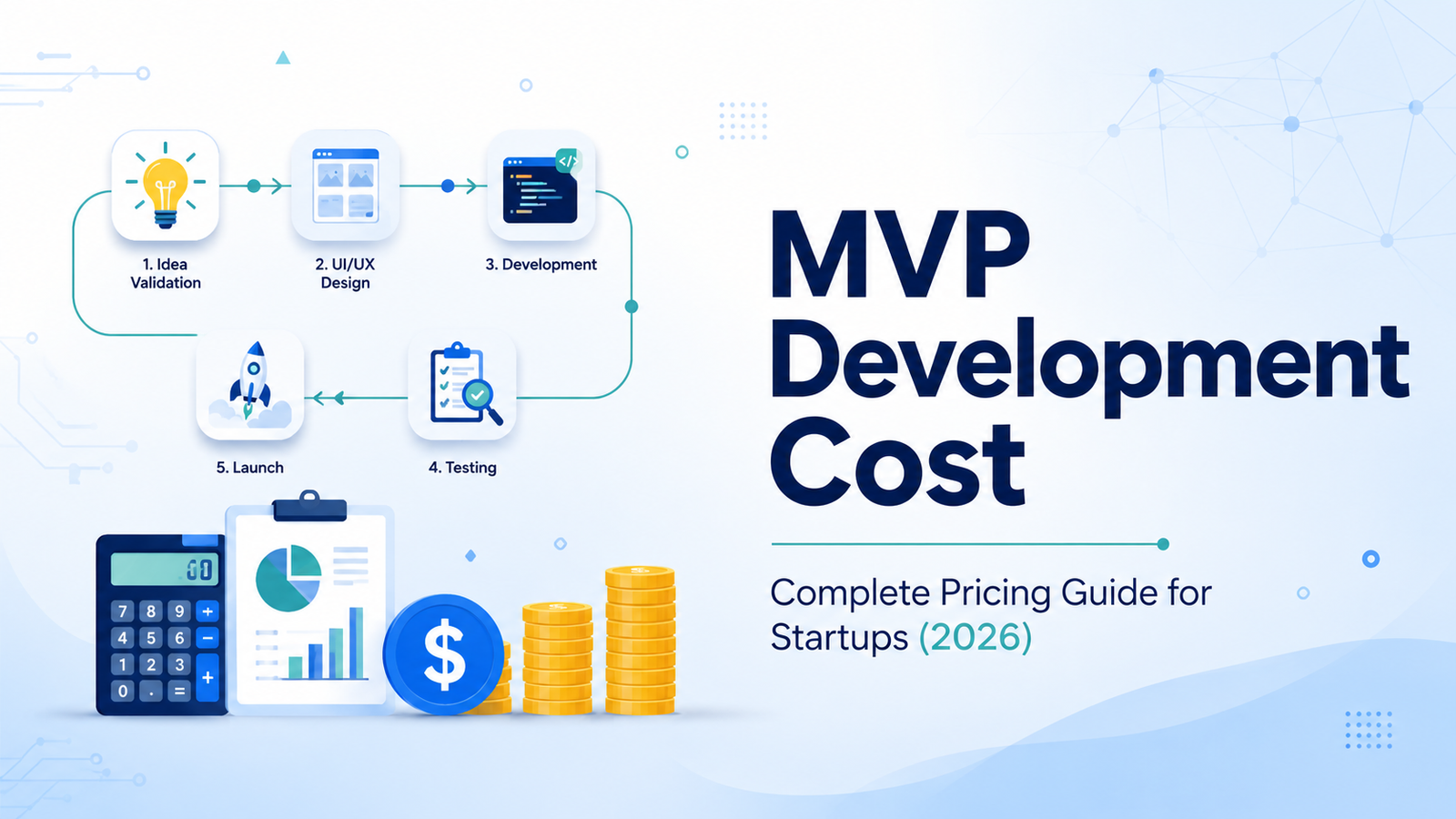
A typical MVP build includes discovery, UI/UX design, frontend and backend development, API integrations, QA testing, and deployment.
Plan for 15 to 20 percent of your original development cost annually to cover hosting, bug fixes, and updates.
SaaS, marketplaces, fintech, healthtech, and AI products all benefit significantly from validating demand before full-scale investment.
Focus on core features only, use cross-platform frameworks, rely on existing APIs, and choose a development approach that matches your actual complexity needs.
Discover more from PratsDigital
Subscribe to get the latest posts sent to your email.

[…] price contracts work best for clearly scoped projects like MVPs, small apps, or websites. Typical budgets in 2026 […]
[…] only essential features. This approach validates demand before investing in advanced features. An MVP typically costs $15,000 to $35,000 compared to $80,000 or more for a full-featured […]
[…] good MVP costs $20,000 to $40,000. That’s a fraction of what a full platform costs. Use it to test the […]
[…] cost to build a dating app typically ranges from $25,000 for a simple MVP to over $200,000+ for a fully-featured, AI-driven platform. A basic app with core features like […]